Tuesday, October 23, 2012
Last post for my kids that aren´t kids no mo...

Tuesday, July 17, 2012
The Incas-Machu Pichu
Hey kids! How´s everything going for the summer? I just made it back from London and it was great! I just found this article about the ancient settlers of South America and thought you were going to love it.
Have a great summer and come back in September to see me!!!Hahahaha.
http://www.kidsdiscover.com/blog/spotlight/machu-picchu-for-kids/http://www.kidsdiscover.com/blog/spotlight/machu-picchu-for-kids/
Have a great summer and come back in September to see me!!!Hahahaha.
http://www.kidsdiscover.com/blog/spotlight/machu-picchu-for-kids/http://www.kidsdiscover.com/blog/spotlight/machu-picchu-for-kids/
Sunday, June 10, 2012
Web quests for the summer...
I will be posting links and resources for you to study this summer, don´t worry they won't be hard just games and stories, webquests and quizzes, etc.
This is something to start with:
http://www.nhm.ac.uk/education/online-resources/webquests/ ( some webquests that you can do related to the Natural History Museum in London)
http://www.marks-english-school.com/games.html (really fun games and activities to practice your listening and your grammar)
http://www.sciencekids.co.nz/experiments.html (science experiments and activities to do at home when you are bored)
I´ll post some more later...
This is something to start with:
http://www.nhm.ac.uk/education/online-resources/webquests/ ( some webquests that you can do related to the Natural History Museum in London)
http://www.marks-english-school.com/games.html (really fun games and activities to practice your listening and your grammar)
http://www.sciencekids.co.nz/experiments.html (science experiments and activities to do at home when you are bored)
I´ll post some more later...
Wednesday, May 16, 2012
Inmigration in the world
This is our last science unit and we should enjoy to the max. Here you have some websites that we will comment in the class. We will use them to start a debate about this world wide phenomenon.
http://teacher.scholastic.com/activities/immigration/
http://www.kidsdiscover.com/immigration-for-kids

http://teacher.scholastic.com/activities/immigration/
http://www.kidsdiscover.com/immigration-for-kids
Monday, April 9, 2012
WORLD GEOGRAPHY
We are starting a new unit about geography, where we will focus on three main aspects: Spanish geography, Great Britain geography and the USA geography. I hope you enjoy it. Here you have a starter:
http://geography.about.com/library/maps/blindex.htm
http://www.gosur.com/en/full-map/?zoom=2&map_type=satellite&gclid=CPbb8PqUp68CFUsMtAod3xEKWg
http://geography.about.com/od/learnabouttheearth/a/extremes.htm
http://geography.about.com/library/maps/blindex.htm
http://www.gosur.com/en/full-map/?zoom=2&map_type=satellite&gclid=CPbb8PqUp68CFUsMtAod3xEKWg
http://geography.about.com/od/learnabouttheearth/a/extremes.htm
Wednesday, February 22, 2012
Some activities to practice when you can and have days off, ar you are bored or else :-)
Some sheets and listenings to practice at home...
http://www.juntadeandalucia.es/educacion/webportal/web/PEL?vismenu=0,0,1,1,1,1,0,0,0
http://www.juntadeandalucia.es/educacion/webportal/web/PEL?vismenu=0,0,1,1,1,1,0,0,0
Sunday, February 19, 2012


Monday, February 13, 2012
Egypt
This is the super coolest best unit ever: EGYPT!!!!!!!
We will work on this project for two weeks and a half and I hope you enjoy as much as María and I surely will :-)
We will study something different about the ancient Egyptian culture every day and to finish the project we will do the most awsome handicraft ever!
King Tut Ank Amon, he´s probably the most famous pharaoh. Click on the link to know more:


* Date line + daily life + hierarchy in ancient Egypt.


* Religion (gods, the book of the dead, embalming rituals, etc.)
Check on the links:
http://www.britishmuseum.org/explore/young_explorers/childrens_online_tours/journey_into_the_mummy/journey_into_the_mummy.aspx
http://www.egyptartsite.com/glossary.html
http://www.egyptartsite.com/glossary.html
http://kids.discovery.com/games/just-for-fun/mummy-maker
* Architecture (temples, pyramids, different types of burials depending on the position of the deceased in the Egyptian society)
* Art (hieroglyphics, sculptures and paintings)
** Some more links:
Visit this website for videos about Egypt:
Wednesday, February 8, 2012
Prehistory
Here we go again studying prehistory, it is so interesting that we are going to do and see some things we didn´t have time to do.
Let´s check on all of these pictures and learn some about prehistoric men and women and their culture.
Click on the two pics below and learn more about this fascinating period of time.
Let´s check on all of these pictures and learn some about prehistoric men and women and their culture.
Click on the two pics below and learn more about this fascinating period of time.


Some mo info:
http://www.bbc.co.uk/sn/prehistoric_life/human/species/
We can paint and do pottery like men and women in prehistoric times did.

Carve your own rock art panel
http://rockart.ncl.ac.uk/interactive/learningjourneys/interactive_learningjourneys_game.htm
CHARLES DICKENS
Last Tuesday, we celebrated the 200th anniversary of Charles Dickens, one of the most important novelists of the Victorian period in England. He will be remembered by famous novels such as: Oliver Twist, A Tale of Two Cities, Great Expectations, A Christmas Carol or David Copperfield among many others. Click on the page to read more about Dickens.

As a little tribute to this genius of the all times literature we will study a little work called "A Cricket on the Hearth". Click here to read the whole text:

Wednesday, January 25, 2012
Three interesting cultures to study...
Our next science project is to work on the three cultures that lived together in Andalucia for some time...
http://www.woodlands-junior.kent.sch.uk/Homework/Religion.html
http://www.nyu.edu/gsas/program/neareast/andalusia/index.html
http://www.juntadeandalucia.es/averroes/iestorreolvidada/documentos/1.pdf
We will divide into groups and study different aspects of this period of time.
I hope we all enjoy!
Welcome back María, I´m sooo happy you´re back!!
http://www.woodlands-junior.kent.sch.uk/Homework/Religion.html
http://www.nyu.edu/gsas/program/neareast/andalusia/index.html
http://www.juntadeandalucia.es/averroes/iestorreolvidada/documentos/1.pdf
We will divide into groups and study different aspects of this period of time.
I hope we all enjoy!
Welcome back María, I´m sooo happy you´re back!!
Monday, January 23, 2012
Wednesday, January 18, 2012
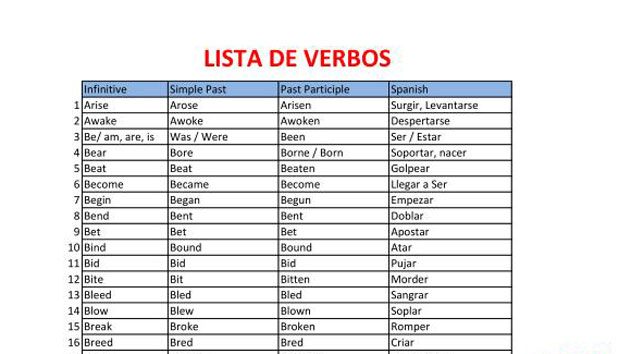
Here you have some material to work in our  English class:
http://havefunteaching.com/worksheets/english-worksheets/word-lists/
LIST OF VERBS
GAMES
English class:http://havefunteaching.com/worksheets/english-worksheets/word-lists/
LIST OF VERBS
GAMES
Sunday, January 15, 2012
My body is changing

We are starting a very important and interesting unit this week: after having studied the different organs and their functions we are talking about our sexual organs and how they work. At your age you may feel funny because your body is experimenting changes that may worry you (if you don´t know why those changes are taking place). We will see in class the different reproductive organs (boys and girls)and we will try to answer every fear, doubts or questions you may have about those changes you are going through. For that purpose we will have a doctor that will talk about anything you want (related to the unit) and will clariffy many of the aspects in the unit.
We will use some interesting websites to investigate and solve the doubts we may find on the way while studying this unit.
THE HORMONE FACTORY
Tuesday, January 10, 2012
Websites to work in class (Wednesday)
Read carefully pages 11-24 and work n groups:
http://www.need.org/needpdf/Exploring%20Magnets.pdf
Some experiments about electricity and magnets:
http://web.archive.org/web/20040603203002/www.galaxy.net/~k12/electric/
practice some more on magnetism:
http://www.myschoolhouse.com/courses/O/1/33.asp
http://www.internet4classrooms.com/science_elem_magnets.htm
http://www.need.org/needpdf/Exploring%20Magnets.pdf
Some experiments about electricity and magnets:
http://web.archive.org/web/20040603203002/www.galaxy.net/~k12/electric/
practice some more on magnetism:
http://www.myschoolhouse.com/courses/O/1/33.asp
http://www.internet4classrooms.com/science_elem_magnets.htm
Sunday, January 8, 2012
We continue with the unit we started before the holidays...
10 Amazing Facts About Magnets
1. If you cut a magnet in half, you get 2 smaller magnets as a result, each with their own north and south pole.
2. The north pole on a magnet points towards the north pole on the earth. This is because they are both giant magnets and are aligning themselves together. This is how a compass works.
3. To make a new magnet, take one you already have and then rub it on a new piece of metal. This process is called magnetisation and will turn any piece of metal into a magnet.
4. Electromagnets are not magnetic all the time. If you pass electricity through a nail wrapped in a copper wire, it turns into a magnet. Once you stop the flow of electricity – it is just a nail and wire again.
5. A magnetic field is an invisible area around every magnet that attracts metals and other magnets to it. That is why you can slowly push 2 magnets together and they will jump to each other, due to them entering their magnetic fields.
6. The magnetic field made by The Earth is so big and strong, that it stretches out into space. The Earth is made from metals and materials like iron, which makes it just like a smaller magnet you might have at home.
7. Fridge magnets are used all over the world in families homes and in America, are seen on an average of 20 times per day!
8. The power of a magnet is measured in Tesla (which was the name of a scientist who specialised in electricity). Even though The Earth is massive and is a giant magnet, it is around 1000 times weaker than a small magnet you might have at home.
9. Magnetism was discovered and used over 800 years ago in ancient Greece and China. They even had their own compasses.
10. Iron is the best metal to use as a magnet as it is naturally magnetic. Others are nickel and cobalt, but if you have a magnet at home, it is most likely made from iron or ferrites, which is a metal made from many different elements.
Some websites to work on:
http://www.zephyrus.co.uk/magnets.html
magnetism games for kids
http://staff.jsr.cc.va.us/asullivan/eisenhower/projects/magnificent_magnets.htm
http://www.coolmagnetman.com/magindex.htm
1. If you cut a magnet in half, you get 2 smaller magnets as a result, each with their own north and south pole.
2. The north pole on a magnet points towards the north pole on the earth. This is because they are both giant magnets and are aligning themselves together. This is how a compass works.
3. To make a new magnet, take one you already have and then rub it on a new piece of metal. This process is called magnetisation and will turn any piece of metal into a magnet.
4. Electromagnets are not magnetic all the time. If you pass electricity through a nail wrapped in a copper wire, it turns into a magnet. Once you stop the flow of electricity – it is just a nail and wire again.
5. A magnetic field is an invisible area around every magnet that attracts metals and other magnets to it. That is why you can slowly push 2 magnets together and they will jump to each other, due to them entering their magnetic fields.
6. The magnetic field made by The Earth is so big and strong, that it stretches out into space. The Earth is made from metals and materials like iron, which makes it just like a smaller magnet you might have at home.
7. Fridge magnets are used all over the world in families homes and in America, are seen on an average of 20 times per day!
8. The power of a magnet is measured in Tesla (which was the name of a scientist who specialised in electricity). Even though The Earth is massive and is a giant magnet, it is around 1000 times weaker than a small magnet you might have at home.
9. Magnetism was discovered and used over 800 years ago in ancient Greece and China. They even had their own compasses.
10. Iron is the best metal to use as a magnet as it is naturally magnetic. Others are nickel and cobalt, but if you have a magnet at home, it is most likely made from iron or ferrites, which is a metal made from many different elements.
Some websites to work on:
http://www.zephyrus.co.uk/magnets.html
magnetism games for kids
http://staff.jsr.cc.va.us/asullivan/eisenhower/projects/magnificent_magnets.htm
http://www.coolmagnetman.com/magindex.htm
Friday, January 6, 2012
Happy New Year everyone!

Well my kids, a new year is here and we have to think about working hard, I hope you´ve enjoyed your holidays and are ready and with renewed energy to work harder.
Subscribe to:
Posts (Atom)